Queer Community in Berlin
Expansion of the Queer Community in Berlin
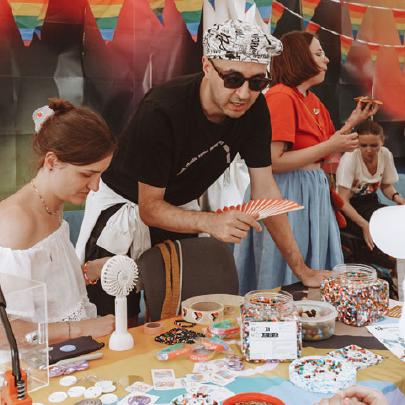
Quarteera e. V. supports Russian-speaking LGBTQ+ people in Germany. Volunteers play a key role in our work. Our activists come from various countries in Eastern Europe, the Caucasus, and Central Asia, such as Ukraine, Belarus, Russia, Uzbekistan, and Kazakhstan.
Since Russia’s attack on Ukraine, Quarteera e.V. has been supporting queer war refugees. The invasion of Ukraine deeply shook our community, and we could not remain passive. In a short time, we built an effective support system entirely on a voluntary basis and have supported over 1,000 people from Ukraine since the beginning of the war. Many of them are expected to stay in Germany for up to three years or permanently, especially in Berlin. At the same time, more and more queer people from other regions of Eastern Europe, Central Asia, and the Caucasus, particularly from Russia and Belarus, are seeking protection in Germany.
Quarteera e. V. provides a safe space for queer people, speaks their languages, has numerous volunteer resources, and a wealth of experience. As part of the community project, we offer a safer space for queer people from Eastern Europe, Central Asia, and the Caucasus who live in Germany through various joint activities. We also promote their social participation through educational programs. Additionally, we continuously expand the voluntary and professional support structures for Russian-speaking queer refugees and migrants.
The action plan is continuously adapted to the needs of the target groups.
Funded by the Senate Department for Labor, Social Affairs, Equality, Integration, Diversity, and Anti-Discrimination as part of the Participation and Integration Program